
Details
Product Details
- Average Rating:
- 9
- Faculty:
- John E Lothes II, MA, LPA, LCAS-A, EdD
- Duration:
- Two Full Days
- Copyright:
-
10 Jun, 2019
- Product Code:
- RNV051990
- Media Type:
- DVD
- Access:
- Never expires.
CPD
Faculty

John E Lothes II, MA, LPA, LCAS-A, EdD Related seminars and products
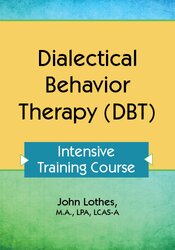
John Lothes, M.A., LPA, LCAS-A, Ed.D, is a licensed psychological associate in Wilmington, North Carolina and is DBT-Linehan Board of Certification, Certified Clinician. As a clinician, John was hired by Delta Behavioral Health in 2008 to help start up and run their Dialectical Behavioral Therapy (DBT) based partial hospital program (PHP), intensive outpatient program (IOP) and later a DBT-based substance abuse intensive outpatient program (SAIOP). Since 2008, John has provided supervision to interns on DBT in the PHP, IOP and SAIOP programs. John also uses DBT in his outpatient private practice working with a number of diagnosis. Dr. Lothes has been doing traditional DBT with his outpatient clients since 2008 as well as running weekly DBT skills groups.
Dr. Lothes was introduced to DBT during his internship in 2004 at the New Hanover County Behavioral Health Hospital, an inpatient facility where he eventually led DBT groups in both their inpatient partial hospital program and substance abuse program. While on internship, in August of 2004, John spent a week training in DBT with Dr. Linehan at the New England Education Institute in Cape Cod, MA. In 2014 (Feb 3-7 & Aug 4-8), Dr. Lothes attended Behavior Tech’s Dialectical Behavioral Therapy Intensive Training (10 Day Intensive). Dr. Lothes frequently attends and/or presents at the International Society for the Improvement and Teaching of Dialectical Behavior Therapy (ISITDBT) and the Association for Cognitive and Behavioral Therapies (ABCT) conferences.
Dr. Lothes is a full-time faculty member at University of North Carolina Wilmington (UNCW) in the Department of Health and Applied Human Sciences and has an adjunct position in the Department of Psychology at UNCW. He has published research on DBT in PHP and IOP settings, using DBT mindfulness skill with stress, anxiety and test anxiety in college students. He continues to research mindfulness and is conducting research on DBT and the reduction of perceived suffering, depression, anxiety and hopelessness in PHP and IOP patients.
Speaker Disclosures:
Financial: John Lothes II has an employment relationship with University of North Carolina Wilmington and has received a grant from Funding Your Passion. He receives a speaking honorarium from PESI, Inc. He has no relevant financial relationships with ineligible organizations.
Non-financial: John Lothes II is a reviewer for Building Health Academic Communities Journal. He is a member of the American Psychological , the Association for Behavioral and Cognitive Therapies, the Cape Fear Psychological Association, and the National Association for Kinesiology in Higher Education.
Additional Info
Program Information
Access for Self-Study (Non-Interactive)Access never expires for this product.
Objectives
- Integrate the theory and techniques of DBT into your clinical practice.
- Teach DBT skills in the areas of Mindfulness, Distress Tolerance, Emotional Regulation and Interpersonal Effectiveness.
- Incorporate how to integrate DBT skills for individual and group therapy treatment.
- Utilize DBT skills for treating mental health symptoms, chemical dependency and complex co-morbidity.
- Designate additional tools and resources for implementing DBT in a clinical setting.
- Articulate a variety of strategies for teaching DBT skills to clients.
- Recommend how to seamlessly integrate DBT skills into individual therapy.
- Discriminate the DBT model from cognitive-behavioral, client-centered, and other treatment modalities.
- Practice a multi-layered approach to validation of clients’ thoughts and feelings.
- Employ DBT diary cards and chain (change) analysis in clinical practice.
- Propose how to operate with consultative groups and treatment teams.
- Assess and manage self-injurious and suicidal behaviors with clear protocols and safety plans.
Outline
History & Philosophy of DBT
- Dialectics explained
- Core philosophies in practice
- Skills training techniques
Mindfulness Skills
- Grounded in the present while being connected to past & future
- Using core skills to achieve “Wise Mind”
- Learn classic and innovative mindfulness skills
- Mindfulness exercises
Distress Tolerance Skills
- Building frustration tolerance
- Utilizing crisis survival strategies and plans
- Learn classic and innovative
- Distress Tolerance skills
- Distress Tolerance exercises
Emotional Regulation Skills
- Understanding emotions and reducing vulnerability
- Incorporating self-care, opposite action and building positive experience
- Learn classic and innovative emotional regulation skills
- Emotional regulation exercises
Interpersonal Effectiveness Skills
- Balance in relationships
- Objective, relationship and self-respect effectiveness
- Learn classic and innovative interpersonal effectiveness skills
- Interpersonal effectiveness exercises
DBT in Practice
- Understanding how therapy works: The Contextual Model
- Evidence-based practice
- Maximizing therapeutic factors, DBT-style
- Essential elements and functions of DBT revisited
Structure Therapy
- Structure as a therapeutic factor
- Structuring the therapy environment
- Identifying treatment targets: suicidality, self-injurious behavior (SIB), therapy-interfering behavior (TIB), and other targets
Validation
- Levels of validation
- Validation as an informal exposure technique
Best Methods of Changing Behaviors
- Self-monitoring with the diary card
- Behavioral contingencies
- DBT-style cognitive interventions
- Behavior Chain (Change) Analysis
Communication Styles: Reciprocal and Irreverent Consultation Group
- Increase your motivation
- Develop effective responses
- Qualities of effective treatment teams
Next Steps: Develop Your Proficiency in DBT
Target Audience
- Counselors
- Psychologists
- Psychotherapists
- Social Workers
- Marriage & Family Therapists
- Addiction Counselors
- Case Managers
- Mental Health Professionals
- Nurses
Reviews
| 5 |
|
| 4 |
|
| 3 |
|
| 2 |
|
| 1 |
|
Overall: 5
Total Reviews: 9
Satisfaction Guarantee
Your satisfaction is our goal and our guarantee. Concerns should be addressed to: PO Box 1000, Eau Claire, WI 54702-1000 or email info@pesi.com.au.
Please wait ...