
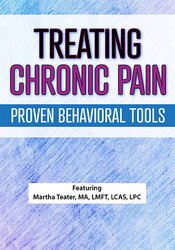
Behavioral Treatment of Chronic Pain: Evidence-Based Techniques to Move People from Hurt to Hope
Details
Product Details
- Average Rating:
- 35
- Faculty:
- Martha Teater, MA, LMFT, LCAS, LPC
- Duration:
- Full Day
- Copyright:
-
06 Dec, 2018
- Product Code:
- RNV051275
- Media Type:
- DVD
- Access:
- Never expires.
CPD
Faculty

Martha Teater, MA, LMFT, LCAS, LPC Related seminars and products
Martha Teater, MA, LMFT, LCAS, LPC, is a Diplomate with the Academy for Cognitive Therapy and is a practicing cognitive-behavioral therapist. She has maintained a private practice since 1990 and has worked in primary care settings, free clinics, and medication-assisted treatment programs. Martha is a Red Cross disaster mental health manager and has been on many national disaster deployments where she provides support to traumatized people. She is also involved with the Red Cross Service to the Armed Forces to develop programs to support military and veteran families.
She has provided trainings in the United States and internationally on topics such as evidence-based treatments for trauma, DSM-5®, compassion fatigue, and behavioral treatment of chronic pain. A prolific writer, Martha has published over 175 articles in newspapers and magazines, including Psychotherapy Networker and Family Therapy Magazine. Martha is the co-author (with John Ludgate) of Overcoming Compassion Fatigue: A Practical Resilience Workbook (PESI, 2014) and (with Don Teater) Treating Chronic Pain: Pill-Free Approaches to Move People from Hurt to Hope (PESI, 2017).
Speaker Disclosures:
Financial: Martha Teater maintains a private practice and receives compensation as a consultant. She receives a speaking honorarium, recording, and book royalties from Psychotherapy Networker and PESI, Inc. She has no relevant financial relationships with ineligible organizations.
Non-financial: Martha Teater is a member of the Academy of Cognitive Therapy and the American Association for Marriage & Family Therapy. She is a peer reviewer for Substance Abuse and Mental Health Services Admiration and a reviewer for the National Board for Certified Counselors.
Additional Info
Program Information
Access for Self-Study (Non-Interactive)Access never expires for this product.
Objectives
- Describe how the emotional aspect of client’s pain can be more problematic than the physical aspect.
- Specify the differences in risks of opioid medications use in men, women and the elderly and the related treatment implications.
- Assess the psychological, physical, social, and behavioral factors that contribute to chronic pain and articulate their treatment implications.
- Implement motivational interviewing techniques to motivate clients towards behavior change that reduce the symptoms of chronic pain.
- Summarize the CDC recommendations for the treatment of chronic pain and communicate how that impacts clinical treatment.
- Utilize mindfulness based strategies to decrease symptoms of chronic pain in clients.
Outline
Pain- Acute vs. chronic pain
- Emotional aspect of pain
- More problematic than physical aspect
- Anxiety, fear, catastrophizing
- ACE (Adverse Childhood Experiences)
- Study and link to pain
- Chronic pain onset: Physical & emotional
- Pain vs. suffering
- Impact of pain
- Prevalence
- Societal costs
- Chronic pain cycle
- Psychological
- Physical
- Factors that impact pain
- Physical, thought, emotions, behaviors
- Social interactions
- Suicidality and chronic pain
- Scope of the problem
- The “painkiller” myth
- Not effective pain relief
- Medication assisted treatment
- Methadone
- Buprenorphine (Suboxone)
- Naltrexone injection (Vivitrol)
- Risks
- Men, women, elderly
- Pain experience factors
- Psychological
- Behavioral
- Social
- Physical
- 5 E’s of pain interview
- Self-report measures
- Impact of pain
- Treatment options
- Medication
- Invasive
- Non-invasive
- CDC guidelines
- Behavioral treatment first
- Importance of therapeutic relationship
- Mindfulness
- Powerful evidence-based interventions
- Motivational Interviewing
- Proven techniques to move toward behavior change
- Goal-setting
- SMART goals
- Matching goals with client values
- CBT tools
- Automatic negative thoughts
- Thought distortions
- ABC worksheet
- Decatastrophizing
- Additional behavioral treatment tools
- Breathing
- Imagery
- Pleasant activities
- Progressive muscle relaxation
- Anger management
- Time-based pacing
- Stress management
- Sleep hygiene
Target Audience
- Social Workers
- Psychologists
- Counselors
- Addiction Counselors
- Occupational Therapists
- Psychotherapists
- Marriage and Family Therapists
- Case Managers
- Physical Therapists
- Physical Therapist Assistants
- Nurses
- Nurse Practitioners
- Other Helping Professionals
Reviews
| 5 |
|
| 4 |
|
| 3 |
|
| 2 |
|
| 1 |
|
Overall: 4.7
Total Reviews: 35
Satisfaction Guarantee
Your satisfaction is our goal and our guarantee. Concerns should be addressed to: PO Box 1000, Eau Claire, WI 54702-1000 or email info@pesi.com.au.
Please wait ...